

Year 5/6
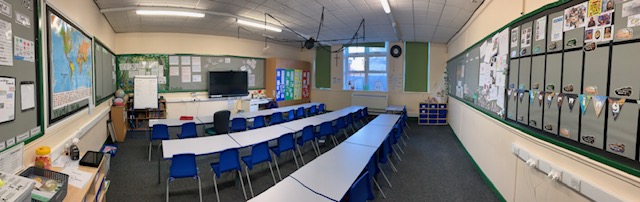
Year 5/6
Teachers: Mrs. B. Riley and Mrs. R. Hughes
End of Year Expectations for Year 5
This booklet provides information for parents and carers on the end of year expectations for children in our school. The National Curriculum outlines these expectations as being the minimum requirements your child must meet in order to ensure continued progress.
All the objectives will be worked on throughout the year and will be the focus of direct teaching. Any extra support you can provide in helping your children to achieve these is greatly valued.
If you have any queries regarding the content of this booklet or want support in knowing how best to help your child, please talk to your child’s teacher.
Mathematics
- Count forwards and backward with positive and negative numbers through zero.
- Count forwards/backwards in steps of powers of 10 for any given number up to 1,000,000.
- Compare and order numbers up to 1,000,000.
- Compare and order numbers with 3 decimal places.
- Read Roman numerals to 1,000.
- Identify all multiples and factors, including finding all factor pairs.
- Use known tables to derive other number facts.
- Recall prime numbers up to 19.
- Recognise and use square numbers and cube numbers.
- Recognise place value of any number up to 1,000,000.
- Round any number up to 1,000,000 to the nearest 10, 100, 1000, 10,000 or 100,000.
- Round decimals with 2 decimal places to nearest whole number and 1 decimal place.
- Add and subtract numbers with more than 4-digits using formal written method.
- Use rounding to check answers.
- Multiply 4-digits by 1-digit/ 2-digit
- Divide up to 4-digits by 1-digit
- Multiply & divide whole numbers & decimals by 10, 100 and 1,000
- Recognise and use thousandths.
- Recognise mixed numbers and improper fractions and convert from one to another.
- Multiply proper fractions and mixed numbers by whole numbers.
- Identify and write equivalent fractions.
- Solve time problems using timetables and converting between different units of time.
Writing
- Add phrases to make sentences more precise and detailed.
- Use range of sentence openers – judging the impact or effect needed.
- Begin to adapt sentence structure to text type.
- Use pronouns to avoid repetition.
- Indicate degrees of possibility using adverbs (e.g. perhaps, surely) or modal verbs (e.g. might, should, will).
- Use the following to indicate parenthesis:
- brackets
- dashes
- comma
- Use commas to clarify meaning or avoid ambiguity.
- Link clauses in sentences using a range of subordinating and coordinating conjunctions.
- Use verb phrases to create subtle differences (e.g. she began to run).
- Consistently organize into paragraphs.
- Link ideas across paragraphs using adverbials of time (e.g. later), place (e.g. nearby) and number (e.g. secondly).
- Write legibly, fluently and with increasing speed.
Reading
- Summarise main points of an argument or discussion within their reading and make up own mind about issue/s.
- Compare between two texts
- Appreciate that people use bias in persuasive writing.
- Appreciate how two people may have a different view on the same event.
- Draw inferences and justify with evidence from the text.
- Vary voice for direct or indirect speech.
- Recognise clauses within sentences.
- Explain how and why a writer has used clauses to add information to a sentence.
- Use more than one source when carrying out research.
- Create a set of notes to summarise what has been read.

End of Year Expectations for Year 6
This booklet provides information for parents and carers on the end of year expectations for children in our school. The National Curriculum outlines these expectations as being the minimum requirements your child must meet in order to ensure continued progress.
All the objectives will be worked on throughout the year and will be the focus of direct teaching. Any extra support you can provide in helping your children to achieve these is greatly valued.
If you have any queries regarding the content of this booklet or want support in knowing how best to help your child, please talk to your child’s teacher.
Mathematics
- Use negative numbers in context and calculate intervals across zero.
- Compare and order numbers up to 10,000,000.
- Identify common factors, common multiples and prime numbers.
- Round any whole number to a required degree of accuracy.
- Identify the value of each digit to 3 decimal places.
- Use knowledge of order of operations to carry out calculations involving four operations.
- Multiply 4-digit by 2-digit
- Divide 4-digit by 2-digit
- Add and subtract fractions with different denominators and mixed numbers.
- Multiply simple pairs of proper fractions, writing the answer in the simplest form.
- Divide proper fractions by whole numbers.
- Calculate percentage of whole number.
- Use equivalences between simple fractions, decimals and percentages to support problem solving.
- Recall and use measurement facts to solve problems involving the calculation and conversion of units of measurement.
Writing
- Use full stops, capital letters, commas, question marks, exclamation marks, inverted commas and apostrophes accurately in all writing.
- Use subordinate clauses to write complex sentences.
- Use passive voice where appropriate.
- Use expanded noun phrases to convey complicated information concisely (e.g. The fact that it was raining meant the end of sports day).
- Use a sentence structure and layout matched to requirements of text type.
- Use a semi-colon, colon or dash to mark the boundary between independent clauses.
- Use a colon to introduce a list and semi-colon within a list.
- Use correct punctuation of bullet points.
- Use hyphens to avoid ambiguity.
- Use wide range of devices to build cohesion within and across paragraphs.
- Use paragraphs to signal change in time, event, place, mood or person.
- Write in a joined style, legibly, fluently and with increasing speed.
Reading
- Refer to text to support opinions and predictions.
- Give a view about choice of vocabulary, structure, etc.
- Distinguish between fact and opinion.
- Appreciate how a set of sentences has been arranged to create maximum effect.
- Recognise:
- complex sentences with more than one subordinate clause
- phrases which add detail to sentences
- Explain how a writer has used sentences to create particular effects.
- Compare texts or aspects of a text.
- Skim and scan to aide note-taking.